


What You Should Know About Lead in Home Plumbing
Most Northern Virginia homeowners who worry about lead think about paint. It's on every real estate disclosure, every renovation permit, every older home inspection. But lead in home plumbing is a quieter risk that's been flying under the radar for years, and it's not your walls you need to worry about. It's your pipes, your valves, and the solder holding it all together.
If your home was built before 1988, the valves that control your water supply may contain lead. So might the solder holding your copper pipes together. Unlike lead paint, which becomes dangerous only when disturbed, lead in plumbing components is in direct contact with the water your family drinks, cooks with, and bathes in every day.
How Did This Happen?
For decades, lead was a standard ingredient in the brass alloys and solders used to make plumbing components. It made metals easier to work with and cast, and nobody was asking too many questions. Pressure-reducing valves, main shutoff valves, backflow devices, fixture shutoffs, and the solder used to join copper pipe joints all potentially contained significant amounts of lead in homes built before the late 1980s.
You probably remember hearing about the water crisis in Flint, Michigan. That situation became a national story because lead from old pipes was leaching into the city's drinking water supply after a change in water source and treatment. The pipes had been there for years, but nobody knew how bad the problem was until people started getting sick. It was a wake-up call for the entire industry.
The issue came onto our radar here in Northern Virginia when WSSC, the water utility serving the Maryland side of the D.C. metro area, reached out to us about it. The EPA's Lead and Copper Rule Improvements, finalized in October 2024, now require water utilities nationwide to identify and replace lead components in their street-side infrastructure within 10 years. That means the city is responsible for what's in the ground up to your property line. What nobody is coming to fix, though, is what's inside your home. Once water crosses into your home's plumbing system, that's the homeowner's responsibility.
The 1988 Turning Point
In 1988, new standards required plumbing components that contact drinking water to be independently tested and certified as lead-free. That certification is called NSF/ANSI 61, and if you look at a newer shutoff valve under your sink or behind your toilet, you'll likely see that stamp somewhere on it.
Think of NSF 61 as the Good Housekeeping seal for plumbing components. It means an independent third party has tested the product and confirmed it won't leach harmful contaminants into your water. Valves and fittings installed before 1988 do not carry such certification. They weren't required to have it.
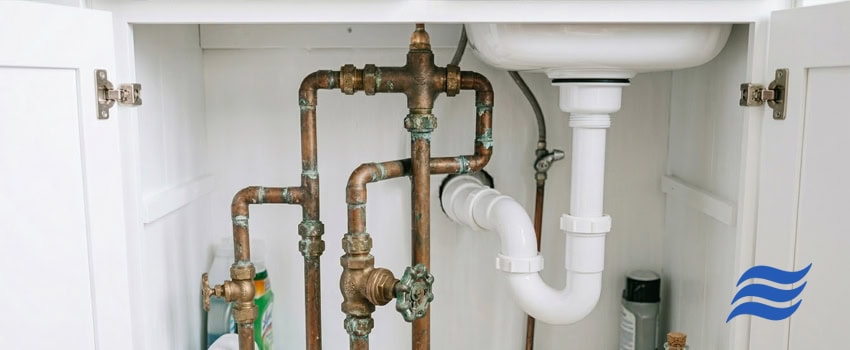
The components most likely to be affected in an older home are the pressure-reducing valve where the main water line enters the house, the main shutoff valve on that same line, backflow prevention devices, and fixture shutoffs throughout the home.
What You Can't See Can Still Hurt You
There is no safe level of lead exposure. The EPA has been clear about this. Lead accumulates in the body over time and causes irreversible damage, particularly in young children, affecting brain development and behavior. In adults, long-term exposure is linked to high blood pressure, kidney problems, and cardiovascular issues.
The unsettling part is that you can't taste it, smell it, or see it. Your water can look perfectly clear and still have a problem. About 48% of Virginia homes were built before 1980, which means a significant portion of the homes in Fairfax, Prince William, Arlington, and the surrounding counties we serve may still have original valves in place.
What to Do About It
Start with a simple question: how old is your home, and do you have any record of the main shutoff valve or pressure-reducing valve ever being replaced? If your home predates 1988 and you have no documentation of that work, the original components may still be there.
A licensed plumber can check those valves and tell you whether they carry the NSF 61 stamp. If they do, great. If they don't, replacement is a job our plumbers handle regularly. A pressure-reducing valve and main shutoff valve are typically replaced together since they're on the same line coming into your home. Given what's at stake, it's one of the more worthwhile things you can do for your home.
This issue is also still developing. As the EPA's new lead regulations continue to roll out and water utilities work through their own timelines, expect this to get a lot more public attention. Getting ahead of it now is the smarter move.
At Nichols & Phipps, we've been serving Northern Virginia homeowners since 1972. If we look at your valves and they're in good shape, we'll tell you that. If they're not, we'll give you an honest answer about what's there and your options. That's how we've always worked.