


And What Northern Virginia Homeowners Can Do About It
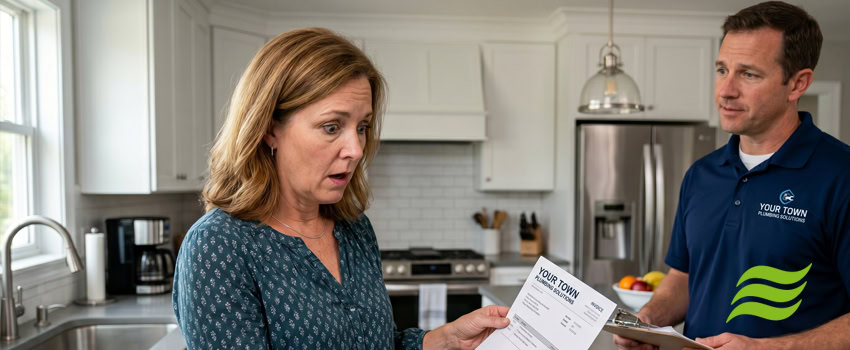
We've been hearing “Why is plumbing so expensive?” quite a bit here lately. If you've gotten a plumbing quote recently and done a double-take, you know what we mean.
We're seeing more calls than usual across the board, from water heater issues to gate valve failures to a recent spike in sump pump calls. Homeowners want to know why it is so expensive, and they deserve a straight answer.
So here it is.
At Nichols & Phipps, we've never been the kind of company that hides behind vague explanations or inflated invoices. We've been serving Northern Virginia homeowners since 1972, and we think you deserve to understand what is actually happening in the industry right now. Knowing the reasons does not make the costs disappear, but it does help you make smarter decisions about your home.
BTW: If you've been wondering about your sump pump, we've covered everything you need to know here.
Materials Are Harder to Get & Cost More
This is probably the biggest driver right now. Tariffs on imported goods have pushed up the cost of the materials plumbers use every day, and freight charges have climbed alongside them. Supply houses that used to stock shelves full of common parts are now carrying much less inventory because ordering has become unpredictable. A part that used to ship in two days might be on backorder for weeks.
For newer homes, that is frustrating. For older homes, it can be a real problem.
Many of the houses we work on in Northern Virginia were built decades ago, and the parts needed to repair the original equipment have simply been discontinued. Finding a replacement often means sourcing specialty parts, adapting a newer component to fit an older system, or recommending a full replacement when a repair would have been the right call in years past. That adds time and cost to every job.
Northern Virginia has more than its share of older homes, and two pipe types we see constantly in that older housing stock are polybutylene pipes and lead valves and solder joints. If you're not sure what's in your home, it's worth finding out.
Learn more about polybutylene pipes here.
There Are Fewer Plumbers Than There Used to Be
The skilled labor shortage in the trades is not a new story, but it's getting more noticeable every year. The average age of a plumber in the United States is 41, and fewer young people are entering the trade. That means the experienced workforce is shrinking while demand stays steady or grows.
This matters to you as a homeowner for a few reasons. First, it affects pricing. When qualified plumbers are in shorter supply, labor costs go up. Second, and this is the part people talk about less, it affects quality.
Working on a home built in the early 1900s, or even in the 1970s, requires a different kind of knowledge than working on new construction. Older homes have older equipment, unfamiliar configurations, and materials that newer plumbers may never have seen in training. An experienced plumber who knows what they're looking at gets the job done faster and avoids the kind of mistakes that turn a straightforward repair into a bigger one. That expertise is harder to find than it used to be, and when you do find it, it has real value.
At Nichols & Phipps, when one of our plumbers walks into your home, we own it. Whatever happens at that job is on us. That's exactly why we're careful about who we put on our trucks.
The Cost of Getting There
Here's something a lot of homeowners don't think about until they see it on an invoice: the cost of travel. When gas prices rise, every service call gets more expensive to make. Trip fees exist because it costs real money to put a qualified plumber in a van and get them to your door. Right now, those costs are higher than they've been.
A Word About Big Box Store Parts
It might seem like a smart move to pick up a faucet or fixture at a home improvement store before calling a plumber. The problem is that manufacturers don't sell their best products through retail channels. What you find at a big-box store is typically a lower-end model, or, in some cases, the same model name with cheaper internal components built specifically for retail. Those parts wear out faster, which means you end up paying for the same repair sooner than you should.
There's also the stock problem. Big box stores don't carry the range of materials a licensed plumber needs, and when something has to be special-ordered through those channels, lead times can significantly stretch the job out. Your plumber sources professional-grade materials through supply houses for a reason. It's not markup for its own sake. It's the difference between a repair that holds and one that doesn't.
The Problems You Put Off Are Getting More Expensive
This is where things get really important for homeowners right now. When the cost of plumbing work goes up, the temptation to delay repairs goes up with it. That logic tends to backfire.
Here are the issues we most often see deferred, and what happens when they do.
Shut-Off Valves
Your home has shut-off valves at every fixture, and most homeowners never think about them until something goes wrong. The problem is that a valve sitting untouched for years will seize up from corrosion. Gate valves, which are common in older homes, are especially problematic. They either stop closing all the way or, once closed, can't be reopened. If you ever have a leak and can't shut off the water, a small problem can become a flood very quickly.
Exercising your valves once or twice a year keeps them working. Replacing them before they fail costs far less than dealing with one that fails at the worst possible moment.
Pressure-Reducing Valves
Most homeowners don't know their pressure-reducing valve (PRV) exists until fixtures start leaking. This valve protects your entire plumbing system from street pressure that can run higher than your pipes are built to handle.
When it starts to fail, the pressure creep is gradual enough that you might not notice until your toilet fill valve starts acting up, your shower cartridge starts dripping, or your water heater shows signs of stress. By that point, you're not replacing one part; you're replacing several. Having your PRV checked during an annual inspection is cheap protection.
If your home was built before 1988, there's an additional reason to have your PRV checked. Older pressure-reducing valves and main shutoff valves may contain lead. We cover that in detail here.
For a deeper look at how water pressure affects your entire system, this article covers it well.
Water Heaters
Customers install a water heater and never think about it again until it stops working. The reality is that neglecting a water heater speeds up its decline significantly. Sediment builds up in the tank, the anode rod degrades without replacement, and what could have been a 12-year appliance becomes a 7-year one. When high pressure from a failing PRV is also in the mix, water heaters can blow out or rust through even faster. Regular maintenance extends the life of the equipment and delays what is never a cheap replacement.
Not sure whether to repair or replace yours? We can help you think through that here.
Drains & Sewer Lines
Most homeowners don't think much about their drains until they back up. By that point, the clog has usually been building for a while. We've seen drain issues flood mechanical rooms and basements because something that started as slow drainage was ignored for too long. Laundry drains are among the worst offenders because debris from clothing accumulates, and people assume it just flows through. Keeping drains clear and scheduling a professional cleaning before problems develop is always less expensive than an emergency call after a backup.
Our drain maintenance guide covers what to avoid putting down your drains and how to stay ahead of buildup.
What You Can Actually Do About It
You can't control tariffs or the labor market. What you can control is how you manage your home.
The homeowners who spend the least on plumbing over the long run are the ones who stay ahead of it. They schedule annual inspections, address small issues before they compound, and call a plumber when something seems off rather than waiting to see if it gets worse. Emergency calls cost more than scheduled service. Repairs cost less than replacements. And replacements cost a fraction of what water damage costs.
If you haven't had your plumbing looked at in a while, now is a good time. Not because something is wrong, but because knowing your system's condition gives you options. You can plan, prioritize, and budget. That's a much better position than scrambling after something fails.
At Nichols & Phipps, we give you honest answers and fair pricing. No commissions, no upsells, no runaround. When it's broken, we fix it. When it can't be fixed, we replace it. When it's working, we tell you that too.
Call us at (703) 670-8519 or schedule online to set up an inspection or get a straight answer on something you've been wondering about. We've been doing this since 1972, and we're not going anywhere.