

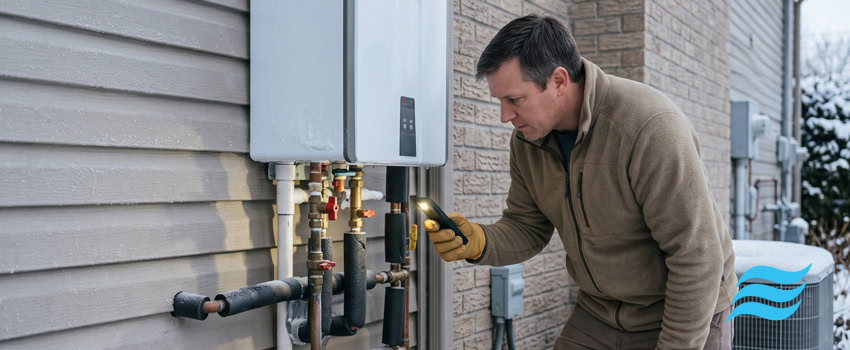
Most of us don’t think about our water heater until the morning it hands us an ice-cold shower. A water heater ready for winter is one you check before the cold settles in, because the season puts more strain on it than any other time of year.
Think of your water heater like a car in a snowstorm. It can get you where you’re going, but it’s working harder, burning more fuel, and any weak spot it had in the summer is a lot more likely to give out. A little attention now goes a long way toward keeping the hot water flowing all winter long.
Whether you have a traditional tank in the home or a tankless unit mounted outside, here’s what cold weather does to your water heater, what to watch for, and what to do if yours won’t make it to next spring.
What Happens to Your Water Heater in Winter
No matter what kind of water heater you have, it has a harder job than it does the rest of the year. Here’s what’s happening behind the scenes.
Colder Water Coming In
The water feeding your home travels through underground lines, and as the ground cools, the water cools too. In the summer, it might arrive at your water heater fairly mild. In the dead of winter, incoming water can drop into the 40s. Your water heater still has to bring that water up to the same temperature, which means it has to work much harder to do it.
Slower Recovery Time
Have you ever noticed that the second shower of the morning is shorter in the colder months? Well, that’s because it takes more energy to heat colder water; a tank water heater takes longer to recover after you’ve used up the hot water. It doesn’t always mean something is wrong, but it does mean an older or undersized unit has less room for error.
More Hot Water, More Often
We all use more hot water when it’s cold outside. Longer showers after shoveling the driveway, more loads of laundry, holiday guests, and more dishes all add up. More demand means your water heater runs more often, and every cycle adds a little more wear.
Higher Energy Bills
Combine colder water with higher demand, and your water heater uses more gas or electricity to keep up. Some of that is unavoidable in winter. But a water heater full of sediment or overdue for maintenance wastes even more energy to do the same job, and you pay for it on every bill.
Outdoor Tankless Water Heaters
Tankless water heaters are a great option for a lot of homes, and outdoor models free up space inside. But when a tankless unit lives outside and is exposed to the weather, winter brings a few extra risks worth knowing about. Indoor units avoid freezing and exposed-line risks, though slower flow in cold weather and vent blockages can still happen with either type.
Freezing Inside the Unit
A tankless water heater has water running through small internal lines and a heat exchanger. If the water inside drops below freezing, those lines can crack or burst, and frozen components can keep the unit from working at all. Outdoor models are built with freeze protection, usually small internal heaters that kick on when temperatures drop, so this isn’t a problem as long as that protection is doing its job.
Power Outages Turn Off the Protection
Here’s the part most homeowners don’t realize. That freeze protection needs electricity to run. Winter storms in Northern Virginia often knock out power, and when the power goes out, so does the heat keeping your tankless unit from freezing.
A long outage during a cold snap is one of the easiest ways for an outdoor tankless unit to get damaged. If one’s in the forecast, a backup power source like a generator can keep that protection running. Otherwise, some manufacturers recommend draining the unit, and that’s an easy job to get wrong, so give us a call, and we’ll handle it or walk you through it.
Exposed Lines
The water heater itself might be protected, but the lines running to and from it often aren’t. Any water line outside that isn’t properly insulated is likely to freeze in cold weather, and lines that were installed incorrectly, without enough insulation or routed through exposed spots, are an even bigger problem. A frozen line doesn’t just risk a burst pipe. It can also cut off water flow to your heater entirely, leaving you with little or no hot water.
Lower Flow Rates in Cold Weather
Even unfrozen lines deliver less in winter. A tankless water heater heats water as it passes through, and how much hot water it can deliver depends on how much it has to raise the temperature. Colder incoming water means the unit can’t heat as many gallons per minute, so running the shower, the dishwasher, and the washing machine at the same time can push it past what it can handle. Over time, regularly overworking the unit can wear out parts or cause them to fail early.
Venting Problems
For gas tankless units, venting is a big concern in winter. Your water heater needs a steady supply of fresh air to burn fuel safely, and it needs a clear path to push exhaust out. Snow, ice, or frozen condensation can block those openings. When that happens, the unit can throw error codes, struggle to run, or shut itself down for safety. That shutdown is a good thing, since it protects your home, but it also means no hot water until the blockage is cleared. Snow isn’t the only culprit, either. Shrubs and plants that grew in close over the summer can crowd vents just as easily.
Traditional Tank Water Heaters
Tank water heaters usually live indoors, so freezing is less of a worry. But they face their own set of winter challenges, and most of them come down to wear that builds up quietly over time.
Sediment Buildup
The water in Northern Virginia carries minerals, and as it heats, some settle to the bottom of the tank as sediment. The more water that moves through your tank, the more sediment it collects, and winter is when most households run the most hot water. That sediment layer sits between the burner or element and the water, so your heater has to work harder to push heat through it. You might hear it as popping, rumbling, or banging noises from the tank.
Corrosion & the Anode Rod
Sediment isn’t the only thing working against your tank. Over time, water slowly corrodes the steel inside. Your water heater has a built-in defense against this called an anode rod. It’s a metal rod that hangs inside the tank and corrodes on purpose, so the tank doesn’t have to. Think of it as a bodyguard that takes the hits for your water heater.
The catch is that an anode rod doesn’t last forever. Once it’s used up, the corrosion moves on to the tank itself, and that’s when you start seeing rusty water, leaks, and a much shorter lifespan. Hard water and heavy use can wear an anode rod down faster. Checking it every few years and replacing it when it’s worn is one of the simplest ways to get more years out of a tank.
Blocked Exhaust
Even though your tank water heater sits indoors, a gas water heater exhaust still has to go outside, whether that’s up through a chimney or straight out through a wall or roof cap. Snow, ice, or overgrown landscaping can block that opening just like they can on an outdoor unit. When a water heater can’t vent properly, it may stop working, and many models will shut down for safety.
When the Water Heater Itself Isn’t in a Heated Space
In an unheated garage, the whole tank sits in cold air, so it works harder to keep up, and if the space gets close to freezing, the inlet line, drain valve, and relief discharge pipe are all at risk too. The same goes for hot water lines running through a crawl space, attic, or exterior wall anywhere else in the house, even when the water heater itself sits in a conditioned space.
How to Get Your Water Heater Ready for Winter
The good news is that most winter water heater problems are preventable. A few simple steps now can save you a cold shower and a costly repair later.
For Tankless Water Heaters
- Insulate every exposed pipe running outside your home.
- Never unplug it or shut off the gas. The freeze protection system needs power to run.
- Let a faucet drip during extreme cold to keep water moving through the lines.
- Keep vents and intakes clear after snow or ice.
- Spread out your hot water use. On the coldest days, try not to run the shower, dishwasher, and washing machine all at once. Your unit will thank you.
- Have it descaled once a year to keep it running through the season.
If your unit loses power for an extended stretch during freezing weather, call us before you try to restart it. A quick check can tell you whether anything froze and cracked while it was down.
For Tank Water Heaters
- Insulate any pipes running through an unheated garage, crawl space, or attic.
- Flush the tank once a year, or have a pro do it for you.
- Keep the temperature around 120 degrees for the best balance of efficiency and safety.
- Have a professional check your safety equipment rather than testing it yourself.
- Clear snow and ice from exterior vents after every storm.
Winter Water Heater Problems & What They Mean
Even with good prep, cold weather can expose problems. Here are the most common winter complaints we hear and what usually causes them.
- The hot water runs out faster than it used to. Colder incoming water plays a role, but if the change is dramatic, sediment may be taking up space in your tank, or a heating element may be failing. It can also mean your water heater was never really big enough for your household, and winter is just making it obvious.
- The water is lukewarm, not hot. On a tank unit, this often points to a worn heating element, a thermostat problem, or heavy sediment. On a tankless unit, it can mean you’re asking for more hot water at once than it can deliver in cold weather.
- The temperature swings in the middle of a shower. On a tankless unit in cold weather, this can mean it’s being asked for more hot water than it can keep up with, or that scale or a clogged inlet filter is slowing it down. On a tank unit, a failing thermostat or heating element is a common cause.
- There’s no hot water at all. Check for a tripped breaker or, on a gas unit, an error code or pilot problem. On an outdoor tankless unit, especially after a power outage or a storm, a frozen line or blocked vent may be the cause. If you suspect anything froze, leave it off and call a plumber.
- Popping, rumbling, or banging. That’s almost always sediment on the bottom of the tank. A flush may help, but if it’s been years, the sediment can harden to the point where a flush won’t clear it.
- Rusty or discolored hot water. This often signals a spent anode rod and corrosion on the tank itself.
- Moisture on the outside of the tank. A little condensation can be normal in cold weather, especially while the heater is refilling with cold water. Pooling water, drips that keep coming back, or rust spots are a different story and usually point to a leak.
- Water around the base of the tank. A leak from the tank body won’t get better. Turn off the water supply to the heater and call us. A failing tank can dump gallons of water into your home with little warning.
Replacing Your Water Heater Before Winter
Water heaters typically last 8 to 20 years, and when one is older, running on a worn anode rod, or packed with sediment, the extra strain of winter is often what pushes it over the edge. If yours is more than 10 years old and already showing some of the signs above, it may not be worth pouring repair money into it right before its hardest season. We’ll always fix it if it makes sense to, but if the repair costs more than the benefit, we’ll tell you honestly, and replacing it on your schedule now beats doing it in an emergency on the coldest night of the year.
If it’s time for a new water heater, the cold months are actually a smart time to think carefully about what you put in. Everything that makes winter hard on your old unit is something your new one should be ready for.
Size It for Winter, Not Summer
This is one of the easiest things to get wrong. A water heater that seems fine in July can leave you short every January, because colder incoming water means it can deliver less hot water at a time. Size a tank for how many people live in your home and how you use hot water. Size a tankless unit for the temperature rise it needs on the coldest days, not the average day. A good plumber will ask about your household and do that math with you.
Decide Whether to Stay With the Same Type
Replacing like for like is often the simplest and most affordable path. But a replacement is also the best time to consider a change, whether that’s moving from a tank to tankless or switching fuel types. Each option has trade-offs depending on your home’s layout, your energy costs, and how much hot water you use. If one far bathroom never gets hot water fast enough, you can add a point-of-use unit alongside your main water heater. If you’re considering an outdoor tankless unit, ask how the installer plans to protect the lines and venting from winter weather.
Ask What the Installation Includes
A water heater is only as good as its installation. Before you agree to anything, it’s worth asking a few questions:
- Does the price include removing and hauling away the old unit?
- Will the installation need a permit, and who handles it?
- Are new connections, valves, and venting included, or are they extra?
- Does the setup need to be brought up to current code?
- Will exposed lines be insulated as part of the job?
- Will they check your water pressure and consider an expansion tank if needed?
These details affect the cost and long-term reliability of the job. At Nichols & Phipps, we walk you through it all up front, so there are no surprises when the work is done.
Stay in Hot Water With Nichols & Phipps
If your water heater is ready for a tune-up, we’ll flush the tank, check the safety equipment, and make sure it’s set to handle the cold months. If it’s time for a replacement, we’ll help you choose a unit that’s sized for winter, installed right, and built to last.
Not sure if yours will make it through the season? Call us at (703) 670-8519 or schedule online, and we’ll help you decide whether a tune-up or a replacement makes more sense for your home.