


Every time you turn on your tap in Northern Virginia, your water has been treated to keep it safe. That means disinfectants, and depending on the time of year, that is either chlorine or chloramines. Both are doing an important job. And both affect your plumbing.
How chlorine affects home plumbing is a question we hear from customers regularly, and the answer is more involved than most people expect. The short version is this: Every common pipe material reacts differently, the damage builds gradually and invisibly, and by the time something fails, the repair is often bigger than it should have been. We see it on every job.
A Note About Northern Virginia Water
Most of the year, the disinfectant in your water is not actually chlorine. Fairfax Water, Prince William Water, Loudoun Water, and the City of Manassas all use chloramines from July through March, switching to free chlorine from April through June for annual system flushing. So for roughly nine months out of the year, what is flowing through your pipes is chloramines, a compound of chlorine and ammonia.
For the purposes of this article, when we talk about chlorine damage, we mean both. Everything described here applies to chloramines as well, and in many cases the chloramine effect on rubber components and fittings is even more pronounced. If you are on municipal water in Northern Virginia, you are dealing with one or the other every day of the year.
Why the Pipe Material Matters
Not all pipes react to chlorine the same way, and the differences matter. Several factors influence how quickly damage accumulates:
- Chlorine and chloramine concentration in your water supply
- Water temperature, especially on hot water lines
- Water pressure throughout the system
- The age and condition of your pipes
What might take decades to cause problems in one home can happen in years in another. Here is what we see with each common pipe type.
Copper
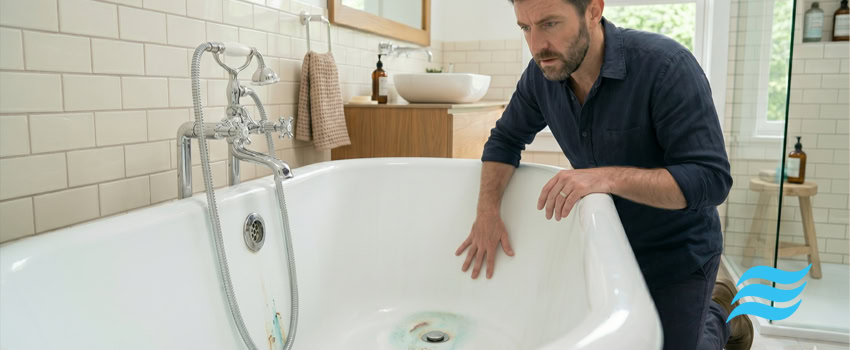
Copper has been a reliable choice in residential plumbing for generations, and it holds up well for a long time. But chlorine reacts with copper to create copper chloride, which slowly destroys the inner wall of the pipe from the inside out. Over time, that process produces the blue and green stains you might notice around drains and faucets. Those stains are not just cosmetic. They are a sign that your copper has been thinning for a while.
The end result is pinhole leaks, and they rarely appear just once. Once copper starts to pit, more leaks tend to follow in the same system. The challenge from a repair standpoint is that chlorine does not eat through copper evenly. On some jobs, the damage is so advanced that when we cut into the pipe, the copper crumbles. Finding a clean, workable section can mean going much further down the line than anyone expected, and what looked like a straightforward repair turns into a much longer job.
Water with a low pH level accelerates this process considerably, so homes with well water or water quality issues are at higher risk. Watch for these signs that your copper may be telling you something:
- Blue or green staining around drains and faucets
- Discolored or rusty water, especially first thing in the morning
- Low water pressure that has gradually gotten worse
- Small, recurring leaks in different areas of the home
If you are seeing any of these, it is worth having your pipes evaluated sooner rather than later. You can read more about common causes for leaks and warning signs that pipe repairs are needed here.
CPVC
Of the common residential pipe materials, CPVC holds up the best against chlorine. That is by design. Chlorine is literally part of its chemical makeup, which gives it a natural built-in resistance that copper, PEX, and polybutylene do not have. If you are repiping a home specifically because of chlorine-related damage and are considering your material options, CPVC is worth discussing with your plumber for that reason.
That said, CPVC is not indestructible, and in our experience, heat and installation stress are what eventually get it, not chlorine directly. CPVC that has spent years on hot water lines in an older home can become brittle enough that routine service calls turn into bigger jobs. The pipe coming off a water heater is often so brittle we cannot make a clean cut without the material cracking further. We end up needing to remove more pipe than planned to get back to material capable of forming a reliable joint. Sometimes that means opening drywall to get there.
Even something as simple as replacing a quarter-turn valve can become a bigger job once we see the condition of the surrounding pipe. CPVC also tends to develop chlorine-related odors in homes with high chlorine levels, which can be a nuisance even before structural problems appear.
PEX
PEX is the modern go-to for residential plumbing, and for good reason. It is flexible, freeze-resistant, and generally durable. But it is not immune to chlorine. PEX is manufactured with antioxidants specifically to slow the oxidation caused by chlorine, and that protection works well under normal conditions.
What depletes it faster:
- High water pressure combined with continuous flow
- Warm or hot water lines
- UV light exposure on runs through uncovered areas
PEX that is exposed to direct sunlight breaks down faster, especially when chlorine is present. When we encounter PEX in direct light on a job, we have to find ways to shield it, which adds time and materials to a repair that might otherwise have been simple.
There is also something specific to how builders installed PEX during the period when it became popular. Many ran single lengths of pipe from a manifold all the way to a fixture, bending the line through walls rather than using joints. Those bends hold constant stress. When chlorine has been working on the pipe for years, those stress points are the first to fail. So when a tech grabs a PEX line to pull a little extra slack to work with, something completely routine on a newer installation, that pull can cause a section deep inside a wall to crack. The visible repair might be minor. The hidden one is not.
One more thing worth knowing about PEX in high-chlorine environments: when it comes to fittings, plastic holds up better than brass. Brass fittings are more vulnerable to chlorine degradation over time, so in areas with higher chlorine levels, plastic fittings are the longer-lasting choice.
Polybutylene
If your home was built between 1978 and 1995 and you have not replaced your pipes, read this section carefully.
Polybutylene was the most popular pipe material of its era, inexpensive and easy to install. The problem is chlorine. Polybutylene was manufactured with antioxidants similar to PEX, but chlorine destroys them over time. Once that protection is gone, oxidation sets in, the pipe becomes rigid and brittle, and failure follows. It is not a question of if. It is a question of when.
What makes polybutylene particularly difficult to repair is that there is often no reliable way to reconnect it once it has reached a certain stage of deterioration. Crisp, cracked poly B cannot hold a connection. When we fix one pinhole leak, there is almost always another one nearby because the underlying pipe condition is the same throughout. Builders also used the flexibility of polybutylene to run lines in ways that created kinked sections inside walls and under slabs, sometimes with nails run through improperly supported lines. Chlorine eventually finds every one of those weak points.
There is also a water quality concern specific to polybutylene. Because the pipe is manufactured with antioxidants, chlorine breaking those down over time creates a risk of additives and microplastics entering your water supply. For a material already past its expected lifespan, that is one more reason not to wait on replacement.
For most homeowners with polybutylene, the honest conversation is about replacement, not repair. You can read a full breakdown of what that involves and what to expect in our guide to poly pipes.
Your Fixtures, Faucets & Toilets Are Affected Too
Pipes are not the only casualties. Chlorine and chloramine also take a toll on the rubber components throughout your plumbing system, the flappers in your toilets, the O-rings in your faucets and showerheads, and the seals in your shut-off valves. Both chemicals damage rubber, just in different ways. Free chlorine breaks down rubber through oxidation, causing it to harden, crack, and lose its seal. Chloramine is more persistent in the water and tends to soften and degrade rubber over time, which is why you might notice flappers turning mushy or faucet cartridges failing sooner than expected.
If you find yourself replacing toilet flappers more often than seems reasonable, or if your faucets and shower valves are developing leaks faster than you would expect from their age, chloramine degradation is a likely factor. Prince William Water actually notes in their own documentation that when replacing rubber plumbing components, homeowners should ask specifically for chloramine-resistant parts.
This is not a reason to panic. Rubber components are relatively inexpensive to replace. But it is a good reminder that chlorine and chloramine affect your whole plumbing system, not just the pipes behind the walls.
Why Some Repair Jobs Take Longer Than Expected
Homeowners occasionally wonder why a repair that sounded simple ended up being more involved. The pipe material and its condition are almost always the reason. The honest truth is that we cannot fully assess chlorine damage until we are on site and into the work. What looks straightforward from the outside can tell a very different story once we open a wall or cut into a pipe. Here is what that looks like in practice:
- Copper that is heavily corroded may crumble when cut, requiring us to trace back to a healthy section much farther than anticipated
- CPVC that will not hold a clean joint may require opening the drywall to find a workable pipe
- PEX stressed by years of bends inside walls can crack during what should be a simple pull
- Polybutylene in advanced deterioration often cannot be reliably reconnected at all
None of that is padding a bill. It is the reality of working on a plumbing system that chlorine has been quietly aging for decades. The condition of the pipe sets the scope of the job, and that condition is not always visible until you are in it.
What You Can Do
The most practical first step is knowing what kind of pipes are in your home and roughly how old they are. That alone tells you a lot about your risk level. If you have copper with visible blue or green staining, CPVC on hot water lines that has become brittle, or any polybutylene at all, a plumbing evaluation is worth scheduling before something fails. A whole-house plumbing inspection can assess your pipe condition, check water pressure, test for hardness, and flag anything that warrants attention.
Water Filtration & Treatment: What Helps & What Does Not
Not all water treatment systems protect your plumbing the same way, and it is worth understanding the differences before investing in anything.
A whole-house carbon filtration system is the most direct solution for chlorine and chloramine damage. Installed at your water entry point, it treats every drop before it reaches your pipes, fixtures, and appliances, removing chlorine, chloramines, VOCs, and the chemical byproducts that come with municipal water treatment. That reduced chemical load slows the deterioration described throughout this article, improves water taste, reduces odor, and protects rubber components like toilet flappers and valve seals from chloramine degradation.
That said, it will not reverse damage that has already been done. If your pipes are corroding, brittle, or already developing leaks, filtration is not the answer. Replacement is. Where a carbon filtration system really pays off is on pipes that still have good years left, or on new pipes after a repipe. Pairing it with a full house repipe means your new plumbing is protected from day one, which is one of the smartest ways to extend the life of that investment.
Here is how the other common systems fit into the picture:
Water softener: addresses hard water minerals like calcium and magnesium through a process called ion exchange. It does not remove chlorine or chloramine, so on its own it will not protect your pipes from the damage this article describes. Northern Virginia water is moderately to very hard depending on your location, which means many homeowners end up pairing a water softener with a carbon filtration system. They work well together because they each do something the other cannot.
Reverse osmosis: takes purification further by removing dissolved solids, heavy metals, PFAS, nitrates, pharmaceuticals, and contaminants at the molecular level, things a carbon filter cannot fully address. Whole-house RO systems installed at the point of entry treat all the water coming into your home and include carbon filtration as part of the system, so you would not need a separate carbon tank. The tradeoff is a significantly higher upfront investment. For most homeowners, a more practical approach is pairing a standalone whole-house carbon filtration system with an under-sink RO at the kitchen tap. You get pipe protection throughout the entire house and purified drinking and cooking water where it matters most, at a fraction of whole-house RO pricing. If you want fully purified water at every tap and shower in the home, whole-house RO is the way to get there. We can help you figure out what combination makes sense for your home and budget.
Not sure where to start? Getting your water tested is a smart first step before investing in any treatment system. It tells you exactly what you are dealing with, how much chlorine or chloramine is present, whether you have hard water, and whether there are any other contaminants worth addressing. That information takes the guesswork out of choosing the right solution for your home.
If you want to go deeper on water quality and treatment options, we have put together a complete guide to water filtration systems and a deeper look at water treatment solutions for Northern Virginia homes.
Ready to Take the Next Step?
If you are already seeing warning signs, including low water pressure, discolored water, unexplained spikes in your water bill, or recurring small leaks, do not wait. Hidden leaks can cause significant structural damage before they ever become visible and residential plumbing leaks can be more extensive than a single problem point suggests.
At Nichols & Phipps, we have been serving Northern Virginia homeowners since 1972. When something is broken, we fix it. When it cannot be fixed, we replace it. When it is working, we help you keep it that way. Call us at (703) 670-8519 or schedule online to have your plumbing evaluated or water tested (or both)!